

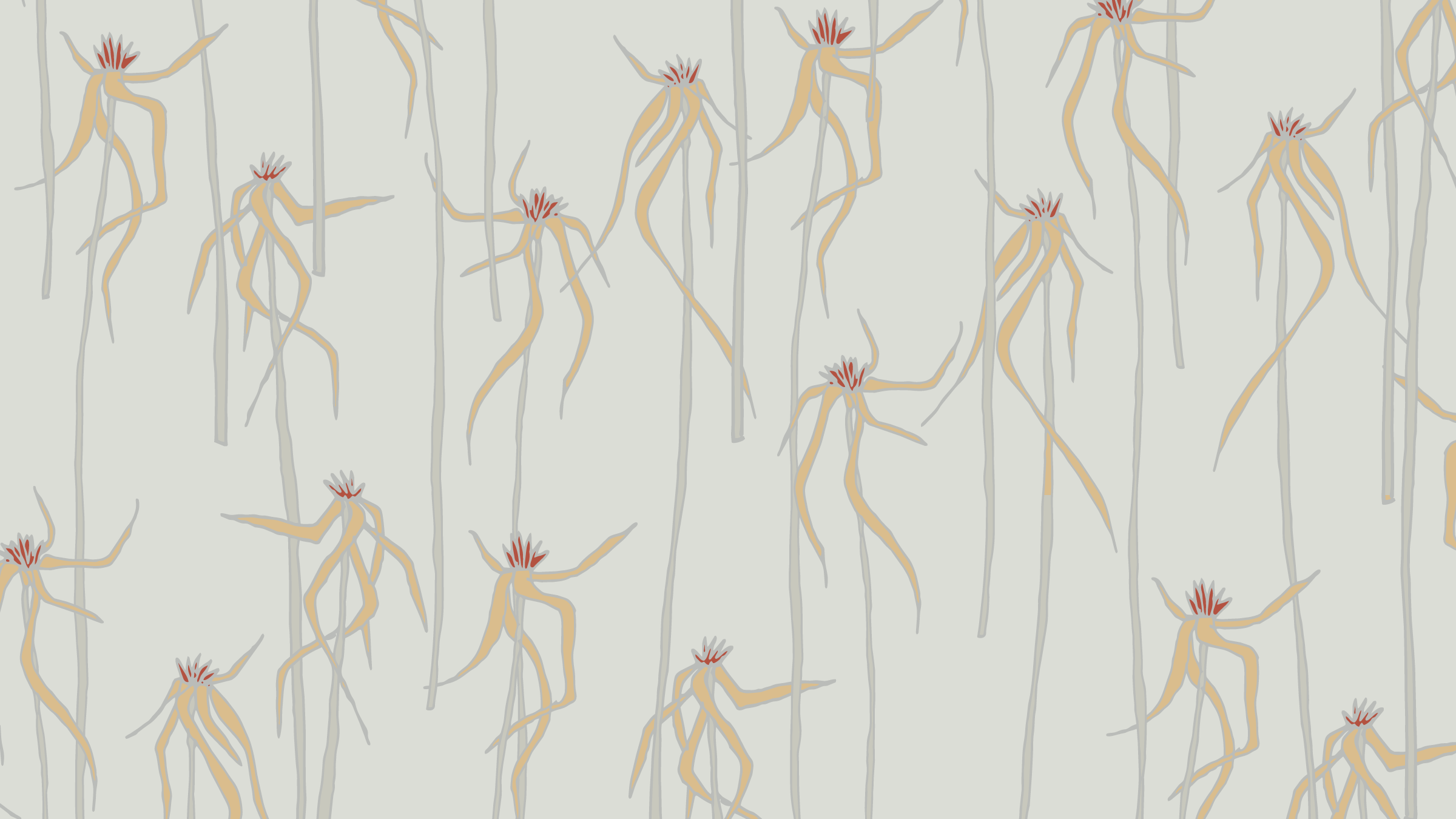
Pattern Study from Graham Creek
This pattern comes from a winter walk at Graham Creek, when the landscape had shifted into its quieter state. I went there after finding the Picture Plant Trail on AllTrails—mostly because the name sounded intriguing. What I found was a cared-for wilderness reserve with wide, groomed trails and open meadows softened by dead leaves and pine needles.
The Walk
At first, I noticed the ground: layers of fallen leaves and pine needles, muted browns and grays. As I kept walking, the meadow began to open up, and that’s when I started to see the spent flower stems. Once I noticed them, they were everywhere.
They stood about two feet tall, growing upright in patches across the open field. What caught my attention were the dried white, leaf-like structures—thin, angular, and wispy. They stood out against the surrounding tall grasses and moved softly in the breeze, despite how brittle they looked.
The Artifact
I picked a small bouquet. The stems snapped easily in my hand—crisp, fragile, already breaking down. They felt like they were on the very last leg of their existence. Soon, new growth would come in and these would return to the earth completely.
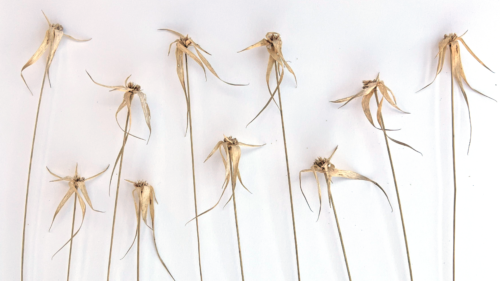
Later, while drawing them, I started calling them flower skeletons. Not as a poetic gesture, but because that’s what they were. The flower was gone. All that remained was structure.
Studio Work
Drawing these stems was unexpectedly difficult. I’ve known how to draw a flower since childhood—the shared symbol of petals and a center is something everyone carries. But here, that symbol didn’t apply. I didn’t have anything familiar to fall back on.
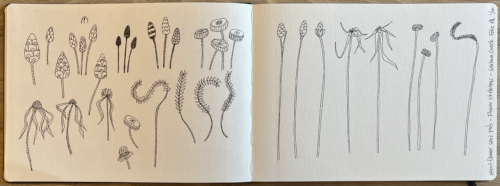
I had to draw what was actually there, not what I thought should be there. Stems, remnants, angular white shapes—no fullness, no symmetry, no bloom. The absence changed how I worked. Observation mattered more than habit.
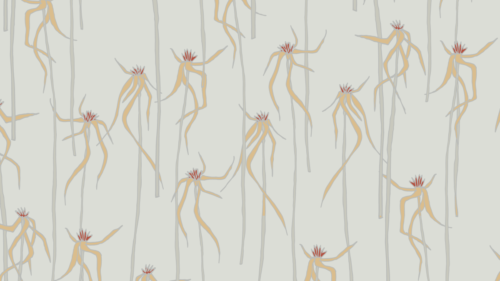
When laying out the pattern, I resisted order. In the meadow, the stems overlapped and clustered without intention. They weren’t part of a cultivated garden. The final layout keeps that feeling—random, uneven, slightly tangled.
Context
This pattern is about the final stage of a wildflower’s life. Not its peak, but its ending. There’s an unexpected beauty there—quiet, fragile, and easily missed if you’re only looking for what you already recognize.
Seeing the Pattern in Use
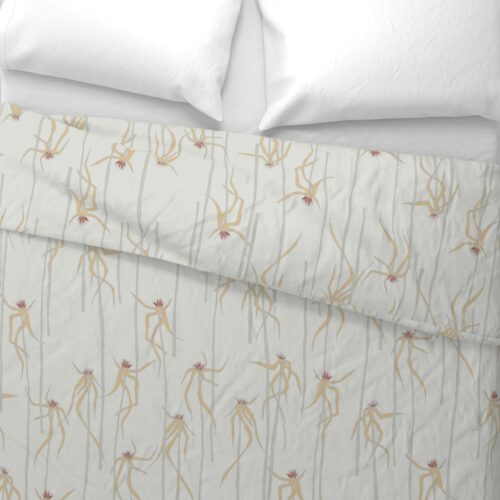
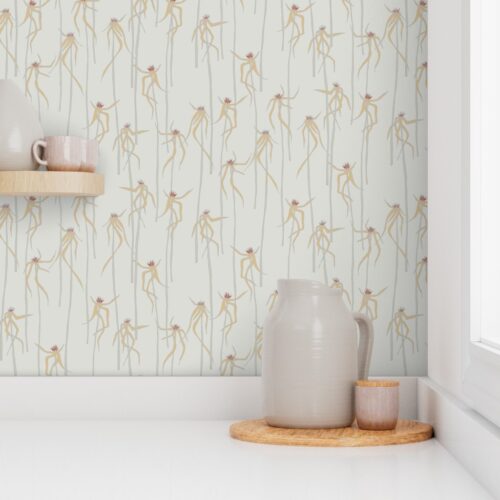
To understand how this pattern lives beyond the page, I’ve included several Spoonflower mockups showing Winter Wildflower Skeletons as wallpaper and fabric. Seeing the stems repeat across a wall or soften into bedding helped confirm the loose spacing and overlapping rhythm that felt right in the meadow.
The pattern is available on Spoonflower across multiple substrates, including wallpaper, fabric, and home décor products.





View the pattern here:
https://www.spoonflower.com/en/wallpaper/21317251-winter-wildflower-skeletons-in-soft-yellow-on-winter-gray-by-playfulfolkstudio-scott_franson
This pattern remains part of the ongoing 100-pattern project—one winter observation, recorded before it disappears.