

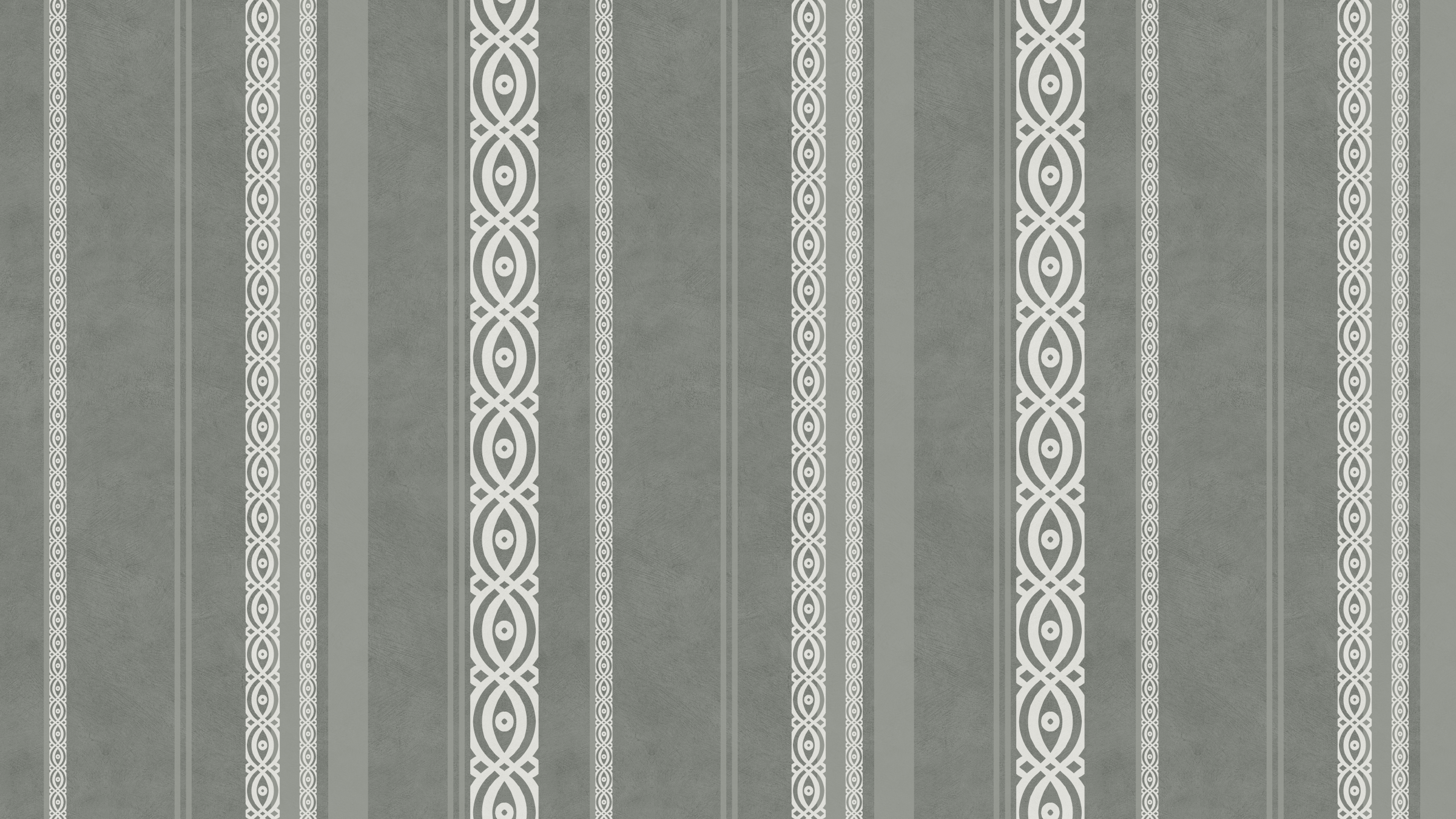
Over the last few days, I’ve been exploring how traditional weave structures can be used as internal logic inside a plaid framework. I began with a simple diagonal twill, moved into herringbone, and then into a Prince of Wales structure, focusing less on surface decoration and more on how structure carries a pattern.
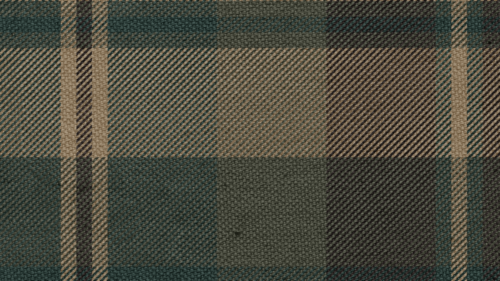
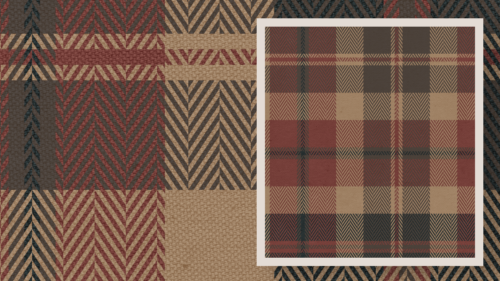
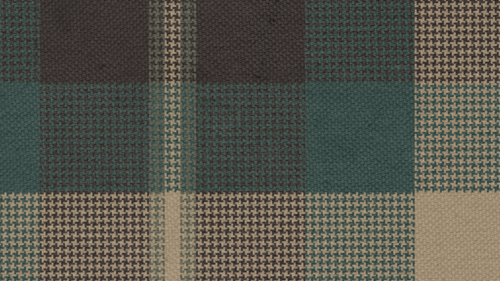
Once that system was in place, I started to question what actually qualifies as a “weave” in this context.
I introduced a geometric pattern I had previously created in iOrnament on the iPad and treated it as a weave substitute rather than a decorative overlay. The goal was to see whether a non-textile pattern could function structurally inside a plaid system, occupying the same role as twill or herringbone.
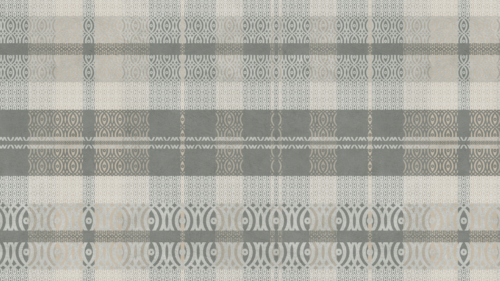
Technically, the approach worked. The structure accepted the substitution. Conceptually, it raised new questions.
As I pushed the pattern further, I simplified the plaid framework and began shifting away from cloth references altogether. The pattern started to read less like fabric and more like an architectural surface. At that point, texture became important. Instead of reinforcing a woven feel, I leaned toward a plaster-like, weathered surface to support a more architectural reading.
Uploading the work to Spoonflower and viewing it in room mockups turned out to be a useful diagnostic step. The mockups made it immediately clear that the scale was too small and that horizontal banding was overpowering the internal pattern detail. What read clearly in a flat repeat collapsed at room distance.
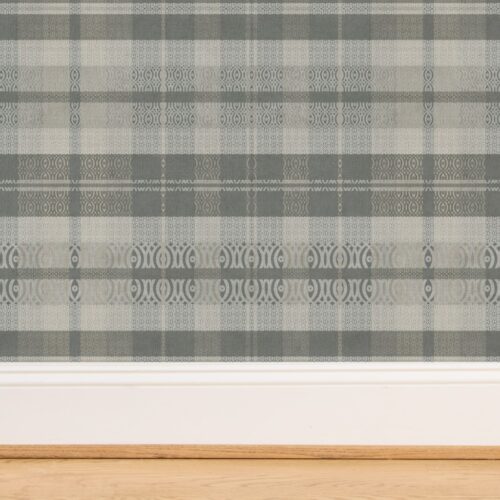
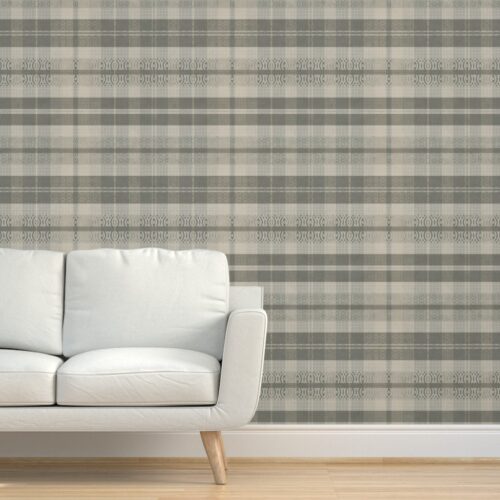
That feedback led to another shift. By removing most of the horizontal structure and reorienting the pattern vertically, the work resolved itself in an unexpected way. The vertical bands gave the ornamental pattern room to breathe and aligned more naturally with architectural references like columns, panels, and wall divisions.
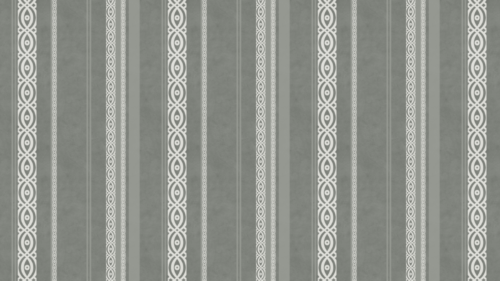
This outcome wasn’t planned, but it felt right. The pattern no longer needed to be described as a plaid, or even as a weave. It functioned best as an ornamental wall surface with architectural rhythm.
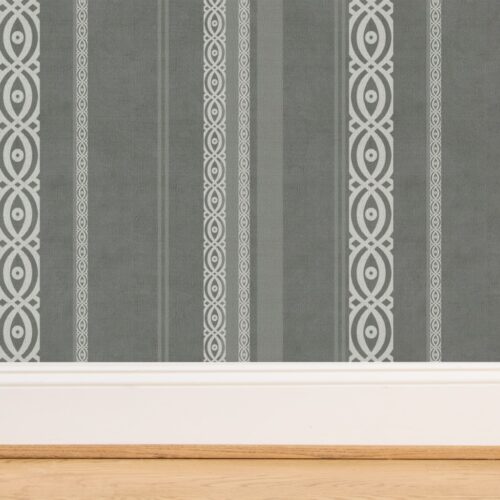
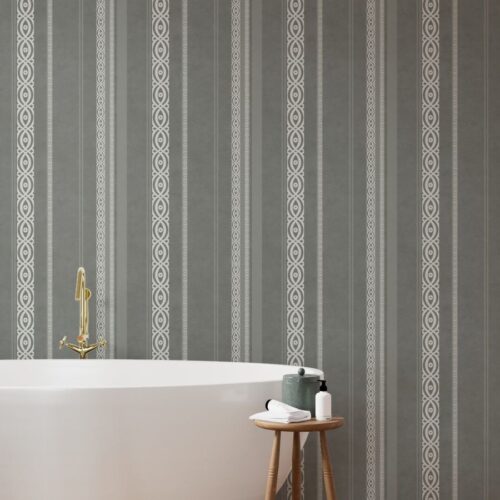
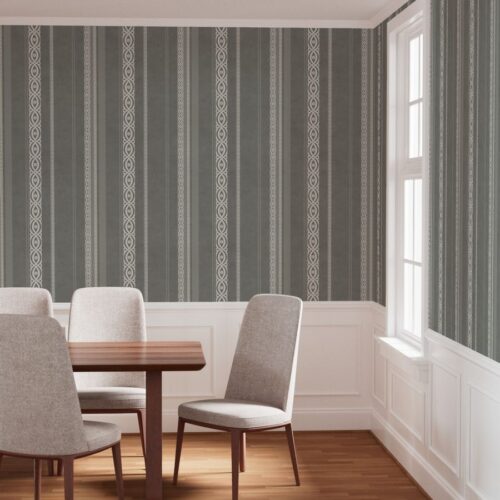
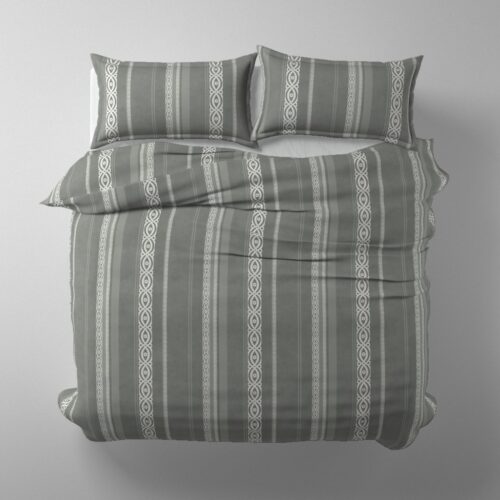
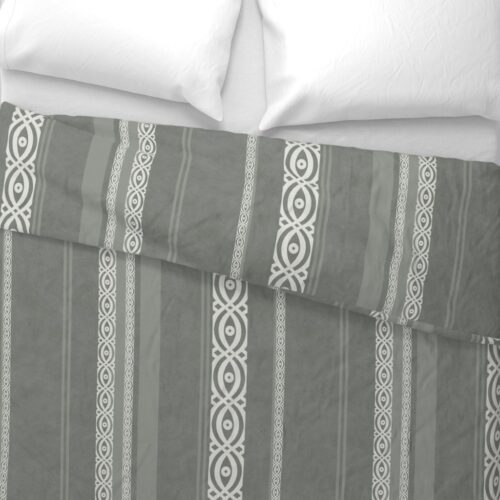
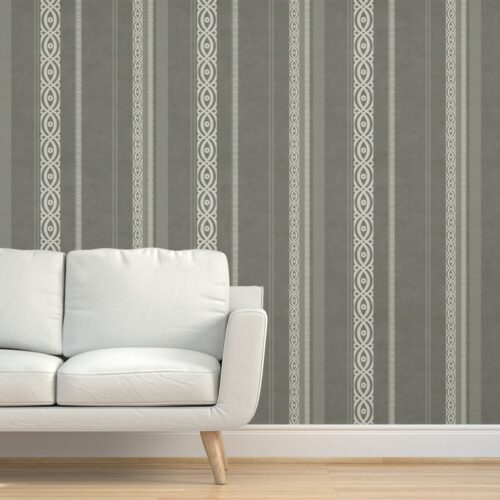
This piece is now uploaded to Spoonflower as a wallpaper design at a large scale. It may eventually become part of a small group of related surfaces, but for now it stands as a record of this particular line of inquiry — from textile structure to architectural surface.