

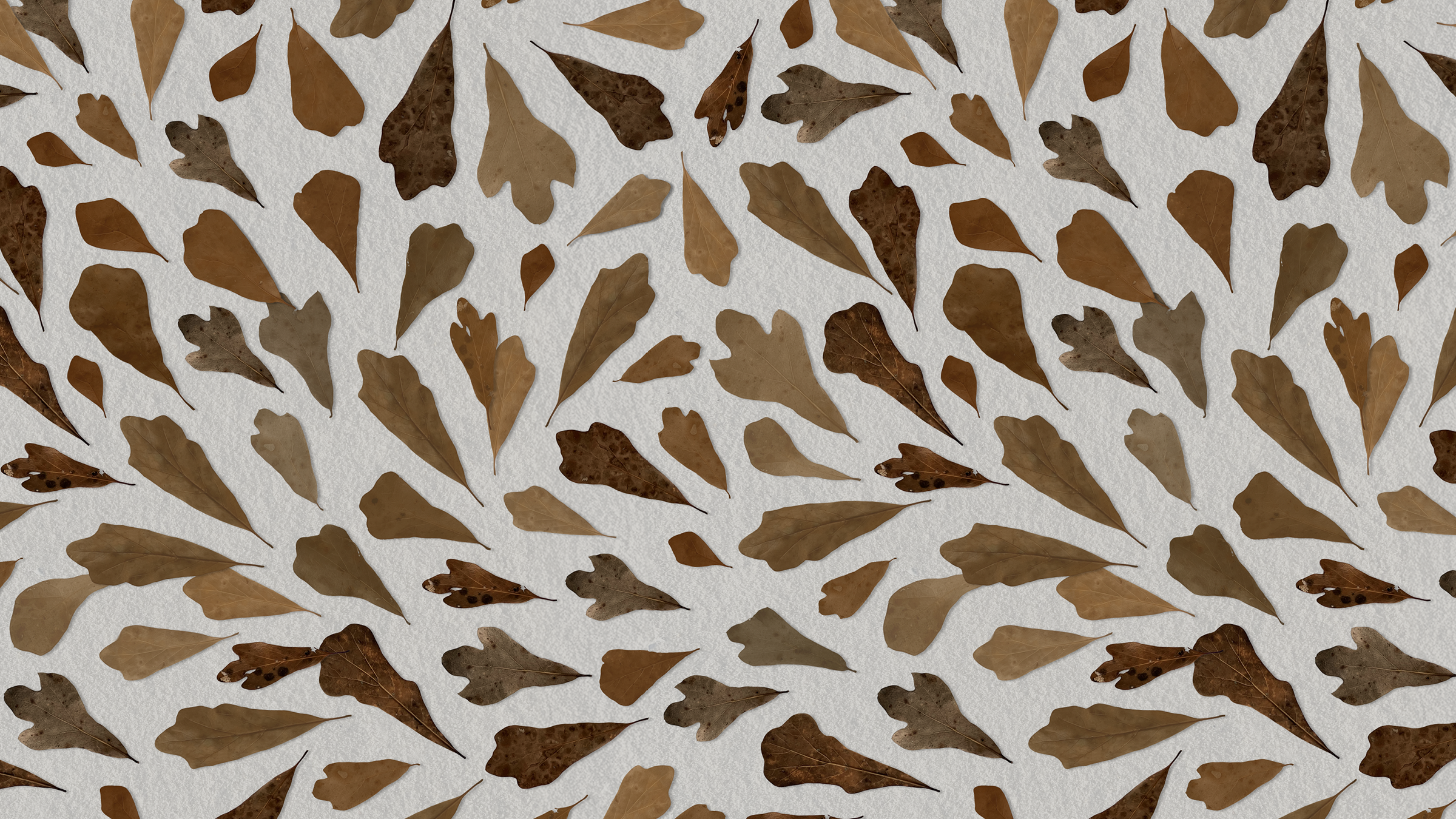
The first pattern began, not at my desk, but on a quiet morning walk.
I’ve been struggling to start this project—overwhelmed by the scale of making one hundred patterns and unsure how to ground the work in something real. On this particular morning, walking through Graham Creek Nature Preserve, something shifted. It was winter in southern Alabama, and the ground was covered with fallen oak leaves. At first glance, they all looked the same, but as I slowed down, each leaf revealed its own personality: differences in shape, wear, spotting, and edge.
That moment reframed the project for me. Instead of inventing pattern ideas, I could notice them. Using objects from my daily walks as subjects ties the work directly to the fact that I am living in Alabama for the winter. The project became less about design as problem‑solving and more about attention and observation.
The Artifact of the Day: Winter Oak Leaves
I collected and photographed a group of fallen oak leaves—dry, muted, and leathery from the season. Oak leaves are especially interesting in winter: they hold on longer than many other leaves, and when they finally fall, they accumulate slowly and unevenly on the ground. There is repetition, but never uniformity.
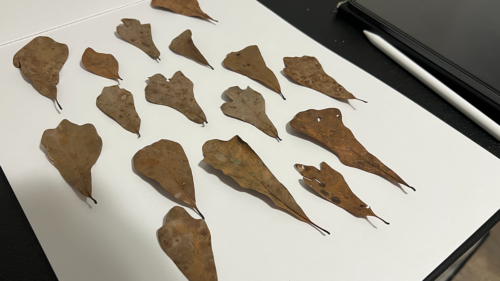
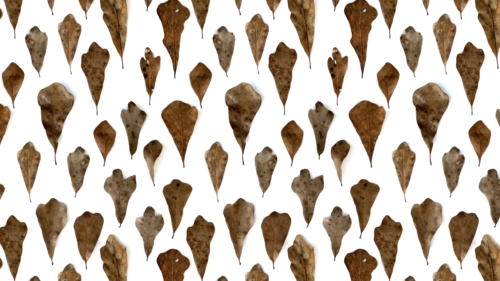
My initial instinct was to arrange the leaves neatly and evenly, thinking in terms of a traditional repeating pattern. That first attempt felt flat and boring. Everything behaved the same way, and the pattern revealed itself too quickly. What I learned almost immediately was that order alone is not enough—rhythm, gravity, and variation matter just as much.
Moving Away from Decoration
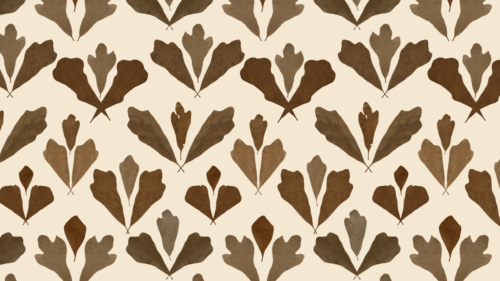
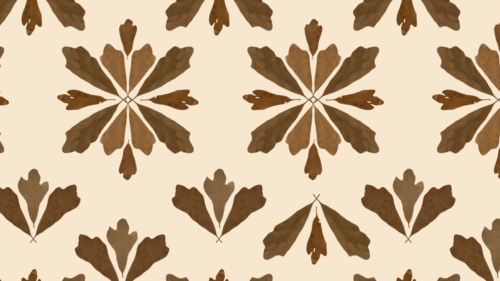
As I experimented, I tried rotation, symmetry, and even emblem‑like arrangements. At one point, the pattern started to resemble a sweater or a folk textile. That was an important boundary to hit. It showed me what this pattern was not. I didn’t want ornament or symbol; I wanted the feeling of leaves resting where they had fallen.
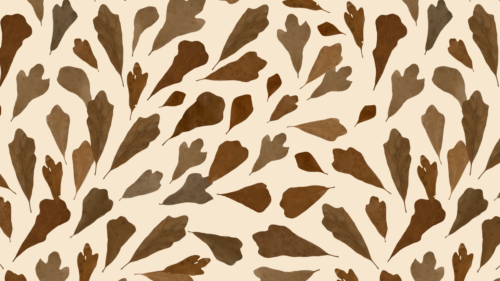
That realization brought gravity back into the composition. Leaves began to tilt, drift, overlap slightly, and settle. Spacing became irregular. Clearings appeared alongside denser patches. The pattern shifted from something decorative to something environmental.
Stylizing Without Losing Place
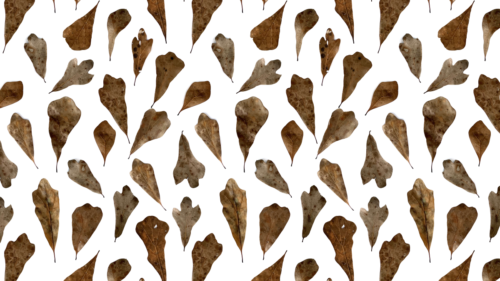
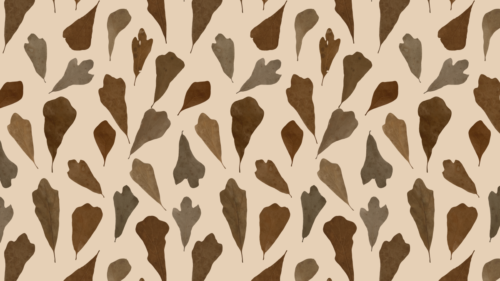
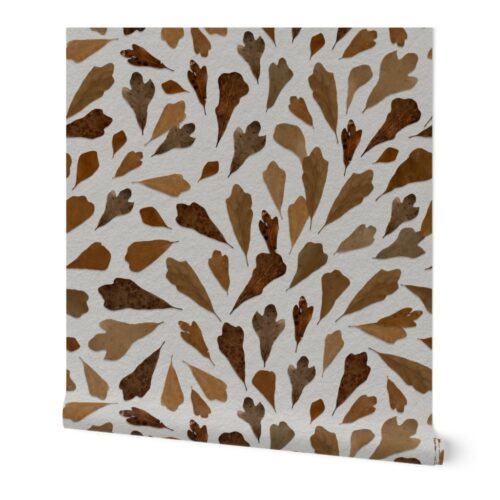
To move the work further away from literal photography, I began sampling colors directly from each leaf and filling the shapes at partial opacity. This softened the imagery and allowed subtle texture to remain without the leaves feeling overly photographic. They began to resemble watercolor washes—less like objects and more like memory.
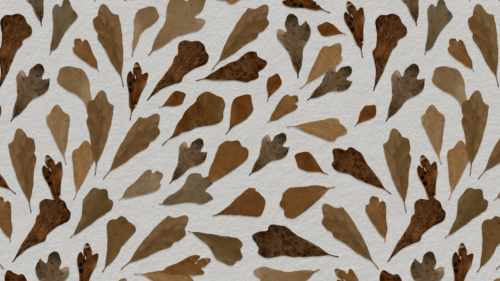
The final and most grounding decision was the background. Rather than choosing a neutral color, I went to the beach near Foley, Alabama, photographed the white sand, and stylized it to the same degree as the leaves. This mattered. The leaves were no longer floating on an abstract surface; they were resting on a specific ground. A very subtle contact shadow reinforced that sense of weight without turning the pattern into illustration.
What emerged is a quiet pattern rooted in place and season: winter oak leaves resting on pale coastal sand. It may grow on me over time, but more importantly, the process feels like a breakthrough. This way of working—walking, noticing, translating—feels sustainable and honest, and it sets the tone for the patterns that will follow.
Process
(In the sections below, I’ll walk through each stage of the pattern’s evolution, showing cropped sections of the repeat as it changed.)
1. Starting Point — Observing the Leaves
Photographed fallen oak leaves collected during a winter walk. At this stage, the leaves are still very literal and photographic, serving as raw material rather than finished elements.
2. Early Arrangement — Order Without Rhythm
An initial attempt at arranging the leaves evenly. While calm, the uniform spacing revealed itself too quickly and lacked movement or depth.
3. Softening the Image
Colors sampled directly from each leaf and reapplied at partial opacity. This reduced photographic realism and introduced a more painterly, memory-based quality.
4. Testing Symmetry
An exploration of symmetry and pairing. This version clarified what the pattern was not, drifting toward decorative textile territory rather than grounded observation.
5. Pushing the Motif Too Far
Further experimentation with emblem-like arrangements. The result felt overly ornamental, resembling knit or folk patterns rather than leaves resting on the ground.
6. Returning to Gravity
Breaking symmetry and reintroducing irregular spacing. Leaves began to tilt, drift, and cluster more naturally, restoring a sense of weight and place.
7. Adding Depth Through Tone
A small number of darker leaves were introduced to create quiet hierarchy and visual depth, suggesting moisture, age, and variation on the forest floor.
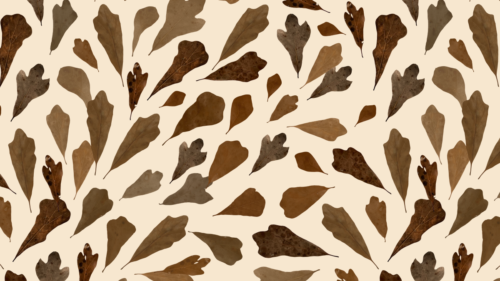
8. Changing the Ground
The background shifted from a neutral color to a stylized photograph of white sand collected near Foley, Alabama. This anchored the pattern to a specific landscape. I also added a subtle contact shadow to reinforce the feeling of leaves resting on the surface. The pattern now reads as environment rather than decoration.
Seeing the Pattern in Use
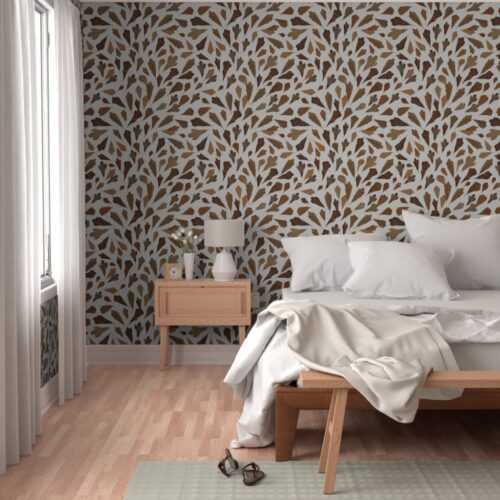
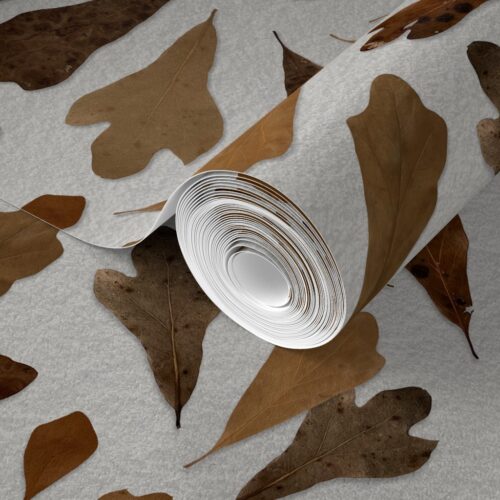
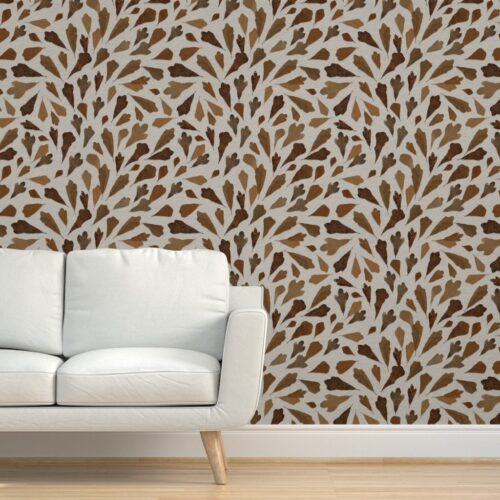
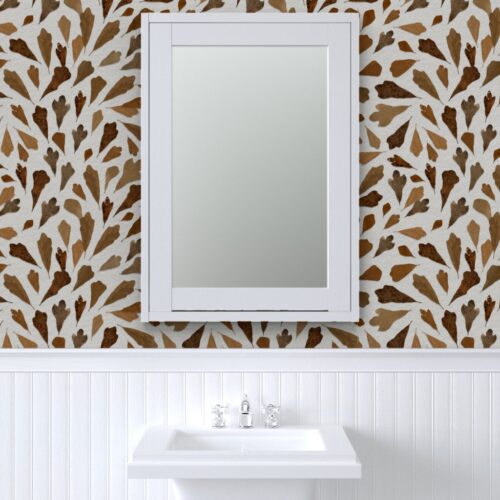
After finalizing the repeat, I uploaded the design to Spoonflower to see how it translates onto finished products. Viewing the pattern as wallpaper and fabric mockups was an important step—this work is meant to live in real spaces, not just on a screen.
The gallery below shows the pattern applied to Spoonflower products, with an emphasis on wallpaper. Seeing it at room scale helped confirm the quiet, ground-based feeling I was aiming for.
View and purchase the design on Spoonflower:
https://www.spoonflower.com/en/fabric/21193216
A Note on Process and Tools
All imagery in this project is created through traditional means—photography, drawing, and hands-on digital composition based on real-world observation. Alongside that, I am using AI as a companion in the process: to help me think through decisions, explore possibilities, reflect on the work, and keep the many moving parts of a long-term project organized.
The AI is not generating the imagery or replacing observation; it functions more like a studio assistant or thinking partner, helping me slow down, articulate choices, and stay in rhythm as the project unfolds.
Closing Thoughts
This post is part of an ongoing project to create one hundred repeating patterns, each rooted in firsthand experience and close observation while living in Alabama. Rather than starting with trends or concepts, each pattern begins with a walk, an artifact, and a moment of noticing—small, ordinary things that reveal more the longer I pay attention.
This first pattern sets the tone for the series. It documents not just an outcome, but a way of working: slowing down, observing what is already present, and translating place into pattern. Some designs may feel resolved immediately, others may grow on me over time, but all of them are records of being here and paying attention.
I’ll continue adding new patterns to this project as they develop. Check back to see how the work evolves, how different places and moments in Alabama shape the designs, and how the process itself changes along the way.